How to choose a kebab meat supplier: 9 criteria for distributors
Nine criteria for choosing a kebab meat supplier for a foodservice distributor: repeatable yield, Halal certificate, EU documents, cold chain and delivery scale.
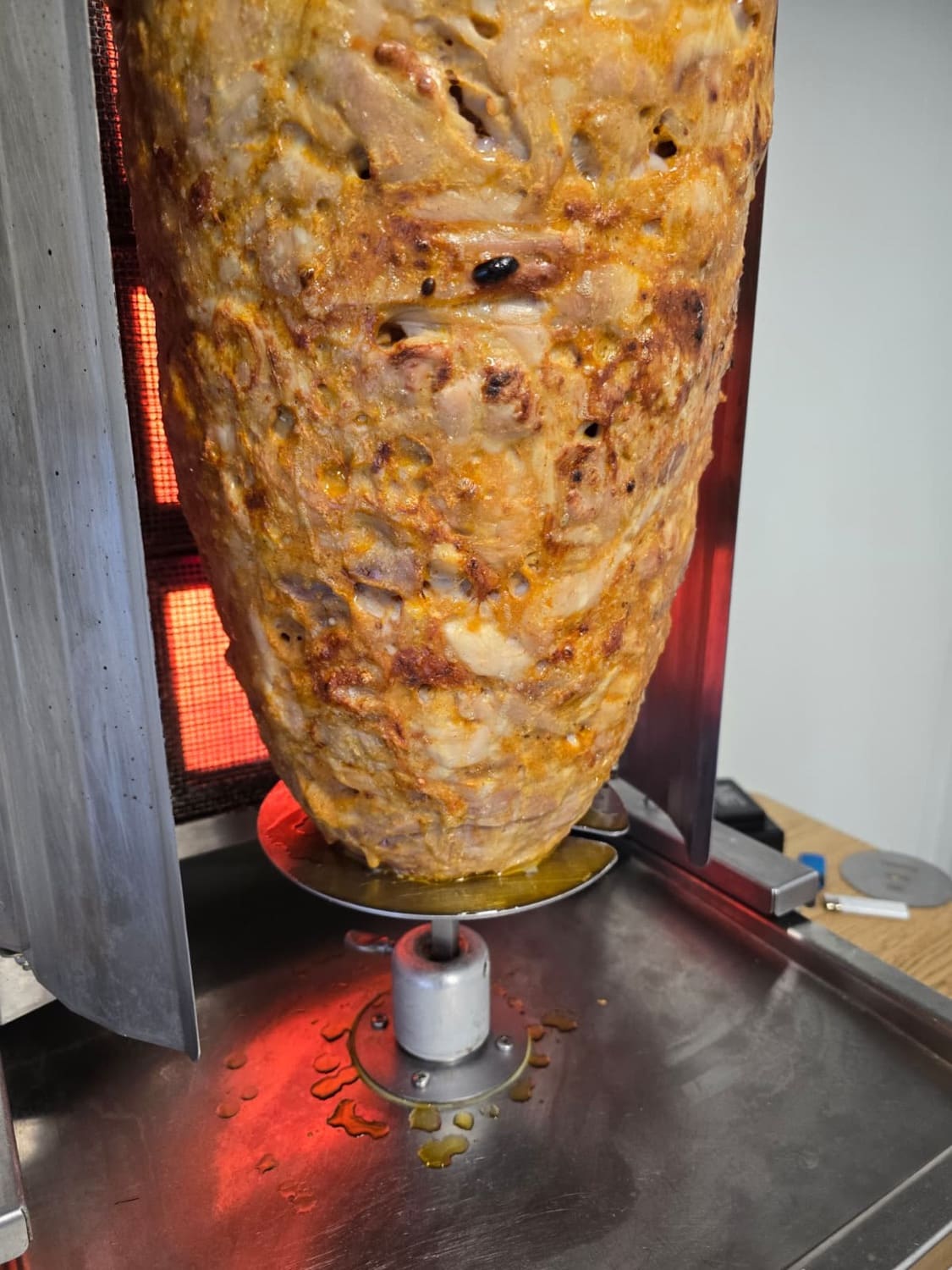
How do you choose a kebab meat supplier when your company supplies dozens or hundreds of outlets? Start with three things: a repeatable yield from every cone, a complete set of documents with every batch and deliveries that keep to schedule. The rest of the criteria on the list below tests those three pillars before you tie yourself to a new source.
Key points in brief
- Ask for the plant’s veterinary approval number; a producer will give it straight away.
- Compare the cost of a portion by the yield from the spit and leave the price per kilogram for the end.
- Check the Halal certificate by its expiry date, not by the claim in the offer.
- A complete set of commercial and veterinary documents travels with every batch.
- Test a new supplier with one pallet at a selected end customer.
1. Producer or middleman?
Establish who you are really talking to. A producer answers for the raw material, the recipe and the plant, so a complaint has an addressee. A middleman resells someone else’s goods, and when a batch goes wrong, sends you to someone you don’t know. The simplest control question is a request for the plant’s veterinary approval number. We compare both channels in the article Kebab meat producer or wholesaler and on the kebab wholesale page.
2. Repeatability batch after batch
Your client’s shop notices a change of supplier at the first bite. Ask about the meat content of the product and the consistency of the recipe between batches, because of two cones at the same price one can give fewer portions when part of its weight evaporates over the heating elements. Compare the yield after roasting, not the bare price per kilogram.
3. A Halal certificate with a valid date
Do you sell to buyers for whom Halal matters? A claim in the offer is not enough. Ask for a copy of the certificate and check the expiry date and the body that issued it, because a missing document closes part of the market to you.
4. Complete documents with every batch
Commercial and veterinary documents protect you during an inspection and at the border. A reliable kebab supplier sends them together with the goods instead of promising to send them next week. Ask also for the product specification with the composition, because that is what you will compare offers on.
5. A cold chain without breaks
A deep-frozen cone needs a constant temperature from the plant to your warehouse. Ask what the supplier transports the goods in and how they control temperature on the route, because a single break in the cold can spoil a whole pallet.
6. Scale and delivery schedule
A distributor needs a partner that can carry full truckloads in a steady rhythm, not single pallets from time to time. Establish how much the plant can move monthly and whether it will carry your growth in season, because a fixed schedule means a predictable warehouse and full spits at your customers.
7. Product portfolio and lead times
The wider the portfolio, the easier you will match a product to different buyers. Check the raw material bases and cone weights, and if you plan to build your own brand, ask about a private label. Lead times at a producer look like this:
| Cooperation model | What it covers | Lead time |
|---|---|---|
| standard | products from the producer’s recipes | 1 to 3 weeks |
| private label | your label on a proven recipe | 3 to 8 weeks |
| dedicated recipe | a product developed for your market | 8 to 16 weeks |
8. A test with no obligations
A serious producer is not afraid of a sample. The safest way in is a test of one product at a selected end customer, weighing how much meat really comes off the spit. You take the decision about scale on your own numbers, and you do not have to drop your current supplier straight away.
9. A contact that answers
In the end what counts is whether you have someone to talk to when something happens on the route or in a batch. Ask who will look after your company and how fast they respond to reports. A single account manager saves weeks of email exchanges.
How does 2Mundos measure up here?
We are a kebab meat producer from Silesia and after 12 years of export our cones travel to 10 countries. We work under the HACCP system, and every batch ships with EU documents, a Halal certificate and the plant’s veterinary approval number PL 24094301 WE. Cones weigh from 10 to 50 kg, with chicken, turkey and mix to choose from in three flavour lines. We carry full truckloads on a fixed schedule, and the start is a test delivery. That is how a verifiable kebab meat supplier works: you verify every claim on this list with documents and a sample.
Where to start a change of supplier?
Pick two or three candidates, ask them the questions from this list and order trial batches, then compare the yield and the documents. We described the ordering process at smaller scale in the article Kebab meat wholesale: how to order. Write to us; we usually reply within 24 hours.
FAQ: choosing a kebab meat supplier
How do you choose a kebab meat supplier?
Check nine things: whether you are talking to a producer, the repeatability of the yield, a Halal certificate with a valid date, documents with every batch, the cold chain, production scale, the breadth of the portfolio, the option of a no-obligation test and a steady sales contact. Before you sign up to a schedule, order a trial batch and count the cost of a portion after roasting.
How does a producer differ from a middleman as a kebab meat supplier?
A producer makes the meat in its own plant, answers for the raw material and the recipe and gives the plant's veterinary approval number straight away. A middleman resells someone else's goods, so in a complaint you depend on a third party. At steady volumes from a pallet up, buying from the producer removes the middleman's margin and gives you influence over the product.
What documents should a kebab supplier provide?
A complete set with every batch: commercial documents, the veterinary documents required in EU trade and a product specification with the composition and storage conditions. When you sell to buyers for whom Halal matters, add a certificate with a current expiry date. If a supplier promises to send the papers after the delivery, treat it as a warning sign.
How do you test a new supplier without risk?
Order a trial batch of one product and direct it to one selected end customer. Weigh how much meat comes off the spit after roasting, compare the result with your current product and only then talk about a schedule. You do not have to give up your current supplier in the meantime, so the test does not stop your sales.