Kebab meat producer or wholesaler? What to choose when buying B2B
See when to choose a kebab meat producer and when a wholesaler. A comparison for foodservice, kebab shops and B2B wholesale buying.
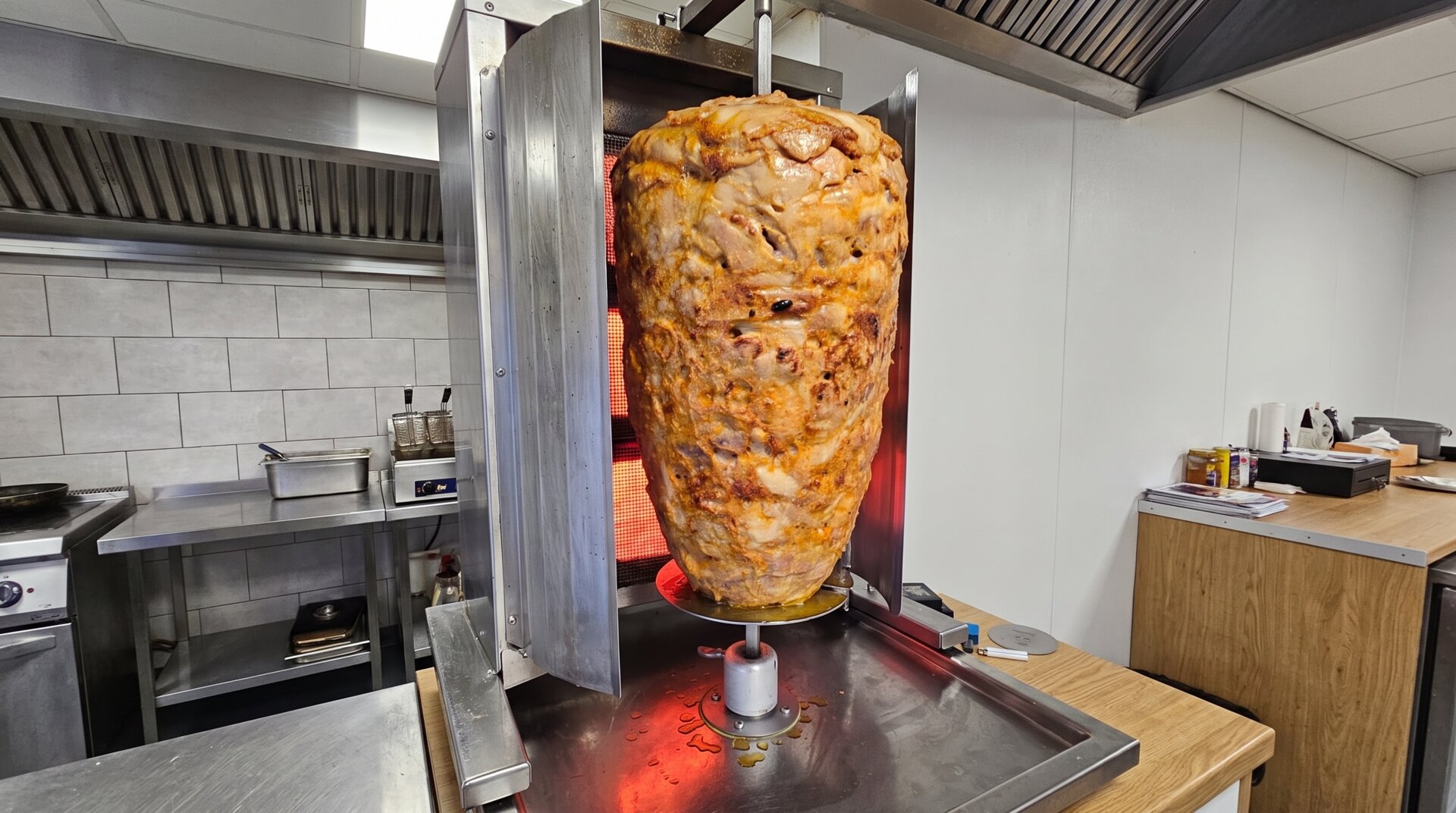
If you buy kebab meat for a shop, a chain or for resale, you have two sources to choose from: a kebab meat producer or a wholesaler. The producer gives you a lower price at volume, influence over the recipe and documents straight from the plant. The wholesaler saves you when you order little, irregularly and need goods for tomorrow. Before you sign a standing order, check both models against the same criteria.
Key points in brief
- A kebab meat producer pays off for regular purchases from one pallet up: the middleman’s margin disappears, and you get influence over the recipe and packaging.
- A kebab wholesaler wins when a shop is starting out and when you’re topping up shortages from one day to the next.
- Count the cost by yield, meaning the kilograms left on the tray after roasting. The invoice doesn’t show that number.
- You can recognise a producer by the plant’s veterinary approval number and complete documents with every batch.
- A mixed model is normal practice: meat straight from the plant, extras from a local wholesaler.
How does a kebab meat producer differ from a wholesaler?
A producer makes the meat in its own plant. It answers for the raw material, the recipe and the consistency of every batch, and its plant carries a veterinary approval number. A wholesaler buys finished goods from producers and resells them, usually together with bread, sauces and packaging. That difference determines how much you pay per kilogram and who you call when a bad batch arrives.
Who is a kebab meat producer?
A kebab producer forms spit cones from marinated meat at its own plant, freezes them and ships them in refrigerated trucks to buyers. Kebab production covers raw material selection, the spice blend, the proportions of each meat and parameter control batch after batch. Buying direct, you talk to the people who actually make the product, so you can agree proportions, packaging format and a delivery schedule.
A simple control question shows straight away who you’re dealing with. Ask for the plant’s veterinary approval number. A producer will give it without hesitation, because it appears on every one of their labels. A middleman will start checking.
How does a kebab meat wholesaler work?
A kebab wholesaler acts as a buying channel. It keeps several brands of meat in stock, along with buns, sauces, fries and packaging, and delivers locally, often from one day to the next. For that convenience you pay a middleman’s margin and accept whatever range the wholesaler happens to carry.
On the Polish market the line can be blurry. Some plants run their own distribution, and some wholesalers commission production under their own brand. So instead of asking who the “real producer” is, establish where the goods physically come from and who answers for their quality.
When is a kebab meat producer worth choosing?
Working directly with a producer pays off when your purchases are regular and you can see volume growth ahead. The price per kilogram drops because the middleman’s margin disappears, and end customers get the same taste every time. On top of that come arrangements no middleman can deliver: the recipe, meat proportions, packaging, labels, and finally a product under your own brand.
For regular and larger orders
The middleman’s margin disappears from every kilogram, and the price drops with scale. You’ll pay less per kilogram for a pallet than for single cartons, and less again for a full truckload on a fixed schedule. The biggest winners are a kebab shop taking several cones off the spit a week and a chain planning deliveries a quarter ahead.
When repeatable quality and recipe matter
Two cones of the same weight can leave very different amounts of meat on the tray. Portion cost comes down to how many kilograms remain after roasting. The invoice won’t show that number, and meat with more water in it looks good on a price list and melts away on the spit. With a fixed recipe the yield is predictable, so you know what a kilogram of sold kebab really costs you and can calculate the margin on a portion honestly. The end customer comes back to the shop where the kebab tastes the same on Tuesday and on Saturday, and that takes a fixed recipe and the same weight in every delivery.
When you need individual B2B arrangements
With a producer you can agree things you won’t settle at a wholesaler’s counter: the proportions of chicken and turkey in the cone, cone sizes for a specific spit, packaging format, labels in the language of the market you sell to. The next step is private label, a product with your label and your recipe. That’s an option for distributors and chains that want to build recognition instead of reselling someone else’s brand.
When can a kebab meat wholesaler be the better choice?
A wholesaler works for small and irregular orders, when a shop is starting out, and when you need to top up missing goods fast. It also wins on convenience, because meat, bread, sauces and packaging arrive in one transport and on one invoice. The middleman’s margin then pays for a real service: a warehouse near you and next-day delivery.
For smaller or irregular orders
A new kebab shop spends its first months learning its own turnover. It’s hard to plan a pallet a month when you don’t know whether three cones will sell or ten. Buying from a wholesaler lets you test demand without commitments and without freezing cash in stock. The same goes for seasonal outlets that sell three times more in summer than in winter.
When you need a broader range
Alongside the meat, a kebab shop buys buns, tortillas, sauces, salads, packaging, sometimes equipment. A foodservice wholesaler pulls a kebab shop’s entire supply into one delivery, which at small scale saves time and simplifies the paperwork. Many outlets combine both sources anyway: meat directly from the producer, the rest of the supplies from a local wholesaler.
Producer or wholesaler? A comparison for B2B buying
The decision usually comes down to price at volume and quality control.
| Criterion | Kebab meat producer | Kebab meat wholesaler |
|---|---|---|
| Price at high volumes | usually better, no middleman margin | increased by the middleman’s margin |
| Quality control | direct, at the source | depends on the source supplier |
| Product flexibility | recipe, proportions and packaging open to agreement | limited to the available range |
| Batch documents | straight from the plant, with a veterinary approval number | passed on from the producer |
| Local availability | follows the schedule and logistics | often good, next-day delivery |
| Scale of cooperation | pallets and full truckloads, chains, distribution | good for small and medium outlets |
| Contact with the maker | direct | indirect |
What to check when choosing a kebab meat supplier
Whether you pick a producer or a wholesaler, check what exactly you’re buying, in what form the goods travel to you and whether deliveries will be predictable. Ask these questions before the first order; at complaint time it will be too late. A product specification and one conversation with the supplier will save you testing quality on your own customers.
Meat quality and type
Establish what the product is made of: poultry kebab meat (chicken, turkey and their proportions), beef kebab meat or a beef and poultry variant, doner or gyros style. Then the form, meaning a roll or cone of a specific weight. Ask about the meat content of the product and recipe stability between batches, then ask for a product specification with the full composition. If a supplier dodges questions about the composition, you already know enough.
Product form and storage
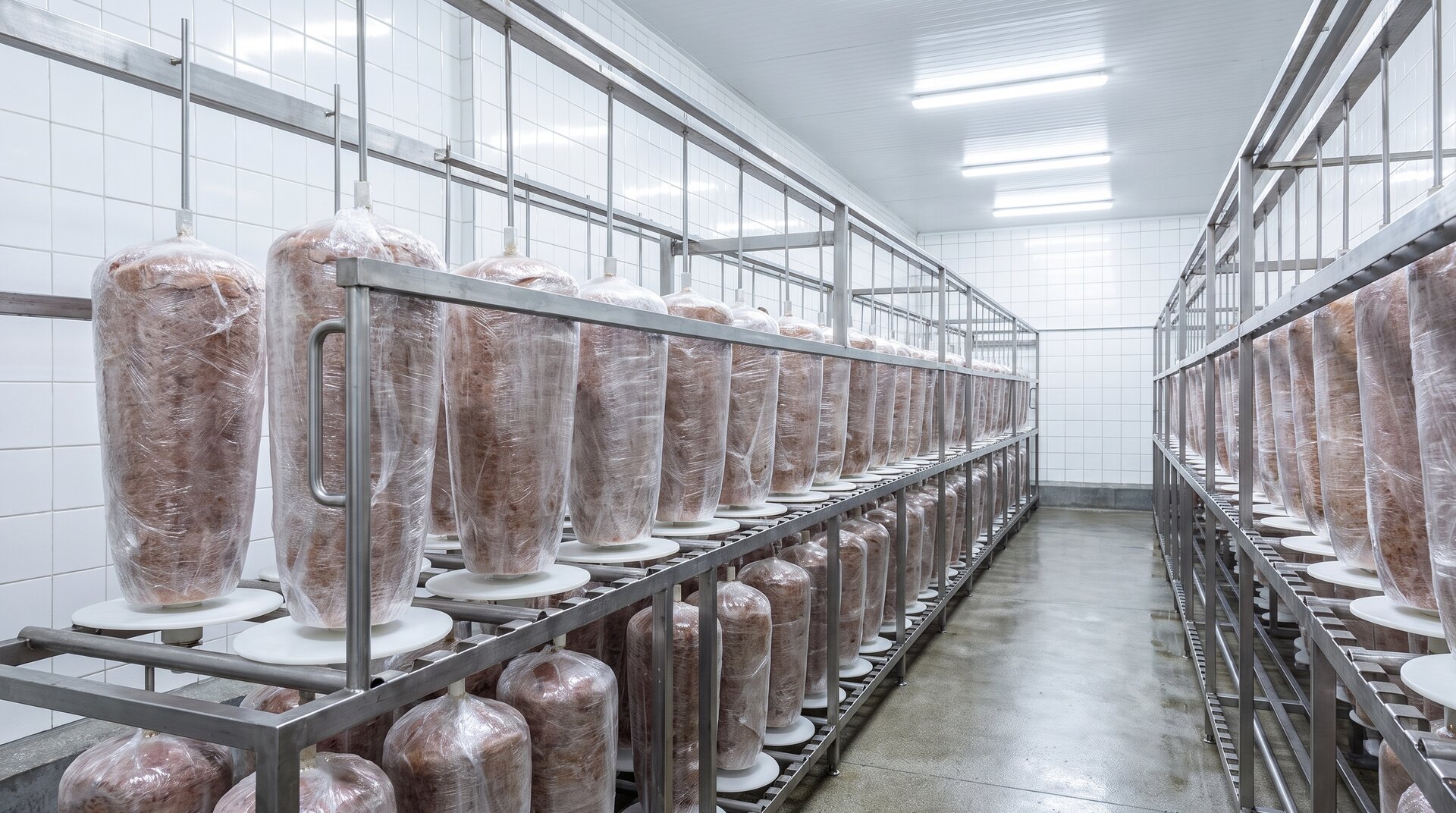
You can buy kebab meat fresh (chilled) or deep-frozen, as a cone for roasting on the spit or already cut. Frozen kebab meat has a long shelf life and stable logistics, but it needs freezer space and defrost planning. A chilled product shortens the preparation chain but has a shorter life. Match the form to your facilities and turnover, and with frozen goods watch the continuity of the cold chain along the whole route.
Logistics and delivery regularity
Find out what the supplier transports the goods in, how they control temperature in transit and what happens when your order grows. For a single shop, delivery on the exact day matters; for chains and distribution, so does whether the supplier can pull a bigger volume once you grow. Ask about the schedule outright. A kebab supplier with a steady delivery rhythm protects you from an empty spit on a Friday evening better than the lowest price on a price list.
Producer or wholesaler: what should you choose?
For larger, regular purchases and a need for repeatable quality, the stronger choice is a kebab meat producer. A wholesaler will be more convenient at the start and for irregular orders. In practice a mixed model also works well, with meat coming from the plant and extras from a local wholesaler. Before you decide, work out the cost per kilogram after roasting, delivery included.
A new shop starts with a wholesaler, learns its turnover and after a few months moves its meat purchases to a producer, leaving the extras with the wholesaler. A shop with stable sales and a chain of outlets switch to a fixed delivery schedule from the plant, because the price difference and repeatable yield show up in the result on every portion. A distributor buys from a producer by definition. If you’re planning growth, contact the plant earlier than today’s volume suggests, because cooperation terms are easier to set at the first pallet than at the first full truckload.
2Mundos as a B2B kebab meat producer and supplier
2Mundos is a Polish kebab meat producer from Silesia. We make spit cones, we’ve been exporting them for 12 years and currently deliver to 10 countries, and recently we’ve been supplying buyers in Poland too. Every batch ships with a full set of EU documents and a Halal certificate, and on the label you’ll find the plant’s veterinary approval number PL 24094301 WE.
The 2Mundos B2B offer for foodservice outlets
We produce doner kebab cones of chicken, turkey and mix, in three flavour lines and in cones from 10 to 50 kg, deep-frozen. The full doner kebab specification is in our product range, and volume and delivery schedule are agreed individually, from pallets to full truckloads in a steady rhythm.
Direct cooperation with the producer instead of buying through a middleman
You work with one dedicated contact on our side: together you agree meat proportions, cone weights, packaging and dates, and at larger scale also a product under your own private label, which we launch in 3 to 8 weeks. After 12 years in export, customs clearance, certificates and cold-chain logistics are everyday work for us. Every delivery arrives with a certificate and a full set of batch documents.
Who is the 2Mundos offer for?
We work with kebab shops with steady turnover, chains of foodservice outlets, and the wholesalers and distributors supplying the kebab market in Poland and abroad. If you’re only opening your first shop, get in touch too; we’ll tell you at what scale direct cooperation starts to pay off. Cooperation details are gathered on the for distributors page, and you can start the conversation through the contact form.
FAQ: producer or wholesaler when buying kebab meat
Is it better to buy kebab meat from a producer or from a wholesaler?
It depends on scale. For steady B2B purchases, larger volumes and a need for repeatable taste, a producer works out better, because you skip the middleman's margin and get influence over the product. For small, irregular orders a wholesaler with a local warehouse and fast delivery will be more convenient. Work out the cost per kilogram including transport before you decide.
Does a kebab meat producer sell wholesale?
Yes. Production plants serve foodservice outlets, chains, wholesalers and distributors, and sales usually start at the level of cartons or a pallet. Price terms improve with scale; the best ones come with a fixed schedule and full truckloads. You'll set the specific thresholds in a sales conversation with the plant.
How do you choose a good kebab meat supplier?
Check the product specification and meat content, ask for the plant's veterinary approval number and batch documents, and ask about recipe stability and the yield after roasting. Then assess the logistics: refrigerated transport, delivery reliability and room to grow the volume. A supplier that handles export clearance has certificates and batch documents as standard.
Is a kebab meat wholesaler a good fit for a new shop?
Yes, especially at the start. A new shop doesn't know its turnover yet, and a wholesaler lets you order small quantities, test different products and top up goods from one day to the next. Once sales stabilise, it pays to move meat purchases directly to a producer. Decide from the start which products you'll later move to buying from the plant.
What kebab meat can you buy wholesale?
Wholesale, you can buy poultry meat made of chicken, turkey or their mix, beef, and beef and poultry blends. The forms are cones for roasting on the spit in various weights, plus ready kebab meat, already cut. Wholesale kebab is above all a deep-frozen product, though chilled meat is sometimes available too.
Can a kebab meat producer prepare a product for a specific shop?
Within the standard offer you can agree meat proportions, cone sizes and packaging format. A fully custom recipe or a private label product requires a certain order scale, because the plant reserves a production line for it. Ask the producer about the minimum volume for that kind of cooperation.