Kebab meat wholesale: how to order in bulk?
See how to order kebab meat from a wholesaler, what to watch out for when buying in bulk and how to choose a supplier for a foodservice outlet.
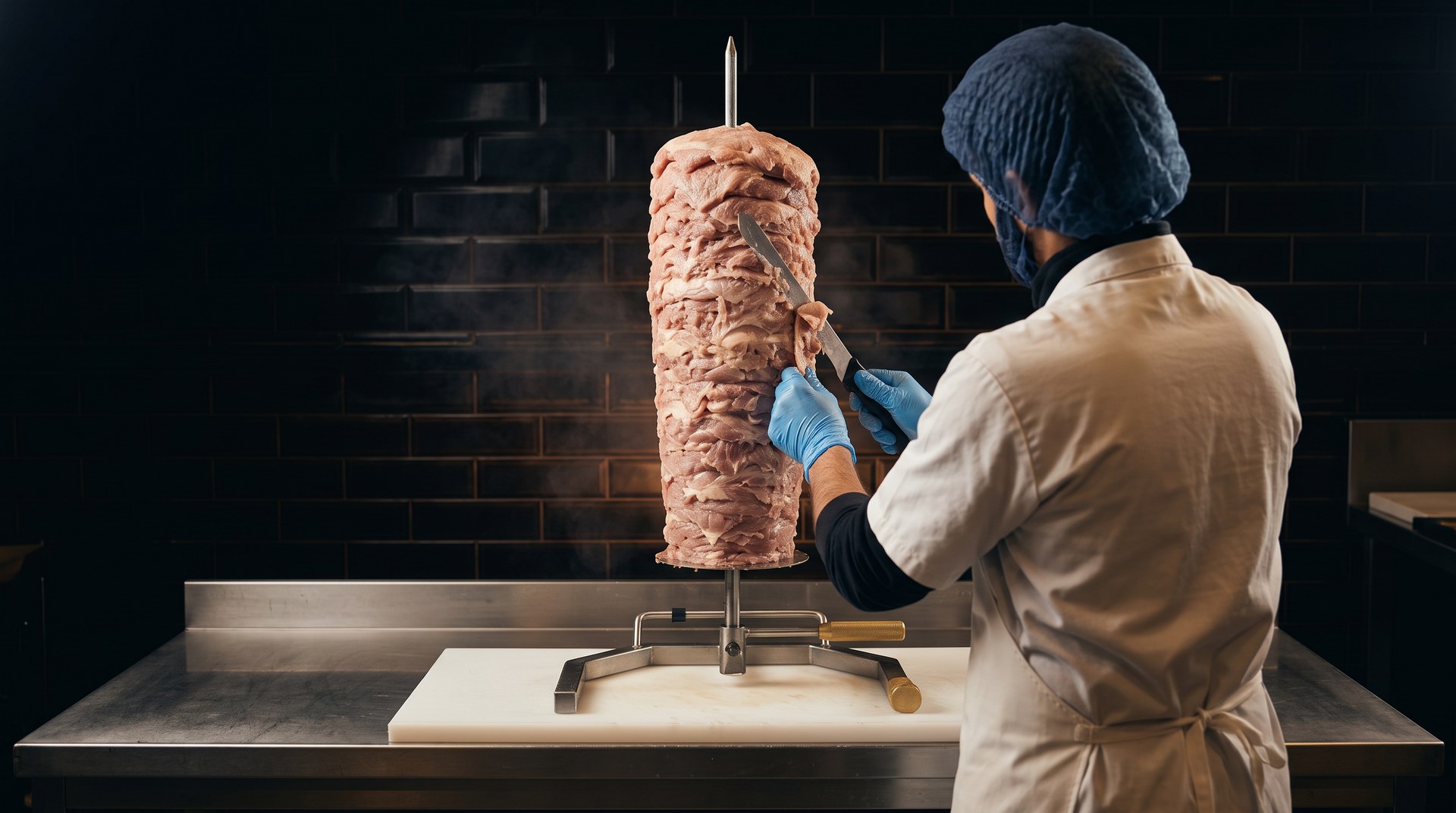
Buying kebab meat wholesale is everyday business for foodservice outlets, kebab shops, chains and distributors that need regular deliveries, repeatable taste and B2B terms. A kebab wholesaler lets you start with a few cartons and local delivery, while a producer comes into play from one pallet up, in return offering a lower price at scale. This guide walks you through the whole process: what information to prepare, how an order works step by step and how to recognise a good supplier.
Key points in brief
- Wholesale starts at cartons and ends at full truckloads; 1 kg of kebab meat is a retail purchase.
- Before contacting a wholesaler, work out your meat usage in kilograms per week. That one number sets cone weights, delivery frequency and price.
- Before you compare prices per kilogram, ask about the yield after roasting. That’s what decides the cost of a portion.
- Your first wholesale order is a trial batch plus a product specification; order a full pallet only after you’ve weighed the yield.
- A complete set of documents with the plant’s veterinary approval number must travel with every batch.
What is a kebab meat wholesaler?
A kebab meat wholesaler is a B2B supplier with its own warehouse: it buys cones and cut meat from producers and resells them to foodservice outlets, kebab shops, food trucks and chains, usually together with bread, sauces and packaging. What separates it from retail is scale and form: you order by the carton on an invoice, with refrigerated delivery, instead of single kilograms off the shelf.
A wholesaler stocks goods from several producers at once, so the range can shift. If your shop builds its taste on one specific product, ask whether it’s a permanent part of the range or whether “a substitute at a similar price” turns up instead. In return, the middleman’s margin buys you real convenience: a warehouse next door and goods for tomorrow morning.
Who is wholesale kebab meat buying for?
Wholesale kebab is bought above all by owners of kebab shops and restaurants with a spit on the menu, new foodservice outlets before opening, chains of outlets and food trucks. A separate group is distributors and local wholesalers that resell the meat further. For a single shop, a wholesaler has one more advantage: a kebab shop’s entire supply, from meat to packaging, arrives in one transport and on one invoice.
What kebab meat can you order wholesale?
Wholesale, you can order kebab meat in three raw-material variants: poultry (chicken, turkey or their mix), beef, and beef and poultry blends. Then comes the form: a cone for roasting on the spit, ready meat, already cut, and a frozen or chilled product. Before you call a wholesaler, establish what your menu needs, because everything else in the order follows from that.
Poultry, beef, and beef and poultry meat
The choice of raw material is dictated by your menu and your customers’ wallets. Chicken is the cheapest and sells fastest; turkey and a poultry mix add a fuller taste at a small difference in price. Beef kebab meat is chosen by doner-style shops with a premium offer. The beef and poultry variant is a compromise: a price closer to poultry, a character closer to beef. Whatever the type, ask about the meat content of the product, because that’s what separates a solid product from a cheap one.
Frozen, ready, roll or cone
The form of the product decides storage, logistics and portion repeatability. Frozen kebab meat is the wholesale standard: stock sits in the freezer for weeks and waits for seasonal sales spikes, but in return it needs space and defrosting planned in advance. A chilled product is sometimes chosen for short, frequent deliveries; its shelf life, however, is counted in days. Ready kebab meat, already cut, works in dishes without a spit. Rolls and cones for the spit are ordered in a weight matched to the grill and the shop’s daily turnover.
How to order kebab meat from a wholesaler step by step?
A wholesale order runs in five steps: work out your shop’s demand, choose the meat type and product form, ask about the minimum order, agree delivery dates and frequency, and finally the B2B cooperation terms. The process looks the same at a wholesaler and at a producer; what differs is the scale, the logistics minimums and how much you can agree along the way.
Step 1. Work out your shop’s demand
How many kilograms come off the spit daily, weekly, monthly? That one number sets cone weights, delivery frequency and the buying channel. A new shop that doesn’t know its turnover yet gives an estimate based on planned sales and corrects it after the first month.
Step 2. Choose the meat type and product form
State what you need right in the enquiry: poultry, beef or beef and poultry meat, frozen or chilled, in a roll, a cone or already cut. Ask for a product specification with the meat content, composition and storage conditions. Without it you’re comparing bare prices per kilogram, while the cost of a portion is decided by the yield.
Step 3. Ask about the minimum order
Wholesale buying comes with logistics minimums: a minimum number of kilograms, cartons or a minimum order value. Thresholds differ between suppliers, so ask outright before you compare offers.
| Purchase scale | Who it’s for | Where |
|---|---|---|
| 1–5 kg | home, taste tests | retail |
| cartons (a dozen to several dozen kg) | new shop, irregular sales | wholesaler, distributor |
| pallet | shop with steady turnover | producer or wholesaler |
| full truckloads on a schedule | chains, distributors, wholesalers | producer |
Step 4. Agree delivery dates and frequency
A kebab meat supplier has to move the goods in a refrigerated truck and stick to the agreed delivery day. Ask what happens when goods run short and whether deliveries will settle into a fixed rhythm instead of ad hoc ordering. A schedule means fewer empty spits and a predictable stockroom; with a frozen product, check in advance how much your freezer holds.
Step 5. Agree the B2B cooperation terms
What’s left at the end are the commercial arrangements: the wholesale price at your volume, invoices and payment terms, a contact for your account manager and terms for longer cooperation. Before you order a full pallet, take a trial batch: a carton or two, roast it at your own shop and weigh how much meat actually ends up on the tray. Only that result belongs in your portion cost calculation.
What information should you prepare before contacting a wholesaler?
The more specifics you give in the first enquiry, the faster you get a real offer instead of an exchange of five emails. A supplier prices an order based on volume, location and product form, so prepare this data before contacting a wholesaler or a plant. You’ll enter the same data later in a request for quotation to a producer. A short list is enough:
- delivery location,
- type of outlet: kebab shop, restaurant, food truck, chain of outlets,
- expected meat usage in kilograms per week or month,
- meat type: poultry, beef, beef and poultry,
- product form: roll, cone, frozen, ready cut,
- order frequency,
- preferred delivery day,
- the date you want to start from,
- contact details of the decision maker.
With a list like that, the first sales conversation ends with a concrete quote, not a request to fill in missing data.
What to look at when choosing a kebab meat wholesaler?
You can recognise a good kebab meat wholesaler by four things: a repeatable product, stable deliveries, refrigerated transport and complete documentation. You can check each of them with a trial batch and a few questions before the first full delivery, and only then is it worth committing to a standing order schedule.
Product quality and repeatability
A shop needs meat with a consistent taste, texture and behaviour on the spit, because a regular customer knows from the first bite that the supplier has changed. Of two cones at the same price, one can deliver several portions fewer, because part of its weight is water evaporating over the heating elements. So before you choose, compare specifications and the yield from a trial batch; leave the price list for the end of the conversation.
Meat availability and delivery stability
A stock-out halts sales in a shop whose menu stands on the spit. A Friday evening with an empty spit and a closed wholesaler is a scenario only a predictable supplier protects you from. Ask about goods availability in season, how fast the kebab supplier can send a missing cone, and what they propose when a product is temporarily out.
Refrigerated transport and storage conditions
Meat requires an unbroken cold chain from the plant to your freezer. Check what the supplier transports the goods in, how they control temperature in transit and in what conditions they store the product at their site. On your side, prepare the space: frozen cones need a freezer, chilled ones will sell faster but won’t wait until the weekend.
Product documentation
Documents in a B2B purchase protect your shop during an inspection and in a dispute with the supplier. Ask for a specification with the composition and storage conditions, commercial documents for the batch and the veterinary approval number of the plant the meat comes from. A reliable supplier sends the complete set together with the goods; if the papers “will arrive next week”, treat it as a warning sign.
Kebab meat wholesaler or producer: what to choose?
The wholesaler wins on convenience at smaller scale, the producer on price and product control with regular purchases. Plenty of shops split their buying: the cone arrives from the plant, and the bread and sauces from the wholesaler round the corner. You’ll find a full comparison of both models, with a criteria table and a cost calculation, in the article Kebab meat producer or wholesaler.
When to choose a wholesaler?
A kebab meat wholesaler works for smaller or irregular orders, at a shop’s start and when you need many products in one place: meat, bread, sauces and packaging. It also saves you in sudden shortages, because it delivers locally, often from one day to the next.
When will a producer be better?
For regular purchases from one pallet up, when you want influence over the product and the cooperation terms, plus direct contact with the plant that makes the meat. The middleman’s margin disappears, and on a fixed schedule the price per kilogram drops with scale.
2Mundos: wholesale kebab meat for foodservice
At 2Mundos we do one thing: kebab cones for the spit. We are a kebab meat producer from Silesia; after 12 years of export our cones travel to 10 countries, and recently to buyers in Poland too. We sell wholesale only, from a pallet as a test to full truckloads on a fixed schedule. Every batch ships with the plant’s veterinary approval number PL 24094301 WE, EU documents and a Halal certificate.
The offer for kebab shops and B2B customers
The range covers cones of chicken, turkey and mix, deep-frozen, in three flavour lines; cones weigh from 10 to 50 kg and are matched to the grill and the shop’s turnover. The doner cone specifications are available on request, straight away. We serve shops with steady turnover, new outlets and chains, as well as wholesalers and distributors that resell 2Mundos meat further, also under their own private label. Cooperation details are gathered on the for distributors page.
How to ask 2Mundos for a wholesale offer?
Write through the contact form and give your location, product type, expected volume and order frequency, meaning the data from the checklist above. You’ll get concrete terms, and the first conversation commits you to nothing; volume and schedule are agreed individually.
How much does wholesale kebab meat cost?
A wholesale price list can’t honestly be quoted without a request for quotation. The price is made up of the type and meat content of the product, the volume and the product form, then the logistics: delivery frequency, location and the agreed cooperation terms. Public wholesalers’ price lists show a wide spread even for similarly described products, and that’s exactly why the price per kilogram alone is not enough to compare offers.
What does the wholesale price of kebab meat depend on?
Four factors weigh the most: the meat type (chicken is cheaper than beef), the meat content of the product, the order volume and the form of cooperation. On top of that comes logistics, meaning the route and delivery frequency. Count the cost by yield: the price per kilogram divided by how much meat remains after roasting. A cheap cone with a low yield regularly loses that calculation to a more expensive one that comes off the spit predictably. You’ll learn the concrete range for your volume by sending a request for quotation with the data from the checklist.
How to start working with a kebab meat wholesaler?
You already have the demand checklist, so send an enquiry to two or three suppliers, order trial batches and compare the portion cost by yield. A kebab meat supplier chosen this way will take over your shop’s supply on a fixed delivery schedule. If your scale is a pallet and up, write to us: we’ll propose a product and a date for the first delivery.
FAQ: buying kebab meat wholesale
Where can you buy kebab meat wholesale?
At a kebab meat wholesaler, at a foodservice wholesaler or directly from a producer serving B2B customers. The wholesaler wins for small orders and fast local delivery, the producer for steady turnover from one pallet up, because you skip the middleman's margin and get influence over the product. Many buyers combine both channels.
How do you order kebab meat from a wholesaler?
In five steps: contact the supplier, specify the meat type and product form, give your expected volume and delivery location, agree the delivery frequency, and finally the B2B cooperation terms. Before a full order, take a trial batch and check the yield after roasting in your own shop.
Does a kebab wholesaler serve small shops?
Usually yes, as long as the order exceeds the logistics minimum: a set number of kilograms, cartons or an order value. A small shop with regular demand is a normal customer for a wholesaler. Thresholds differ between suppliers, so ask about them outright at first contact. Regular ordering and a location on an existing delivery route both help.
What kebab meat can you buy wholesale?
Wholesale, the standard is three raw materials: chicken, turkey and their mix, alongside beef and beef and poultry variants. You can order the product as a roll or a cone for the spit in a weight matched to your grill, or as ready, cut meat for dishes without a spit. The default wholesale form is deep-frozen.
What does the wholesale price of kebab meat depend on?
On four things above all: the meat type, the meat content of the product, the volume and the product form. The rest is logistics, meaning order frequency, delivery route and the agreed B2B terms. When comparing offers, count the portion cost by the yield from a trial batch, because cones at the same price can differ on the tray.
Is it better to order kebab meat from a wholesaler or from a producer?
For smaller or mixed orders a wholesaler will be more convenient, because one transport brings the meat together with the rest of the supplies. For larger, regular cooperation the producer has the edge: a lower price at volume, influence over the product and stable batch quality. Some shops buy the meat at the plant and the extras at the wholesaler.