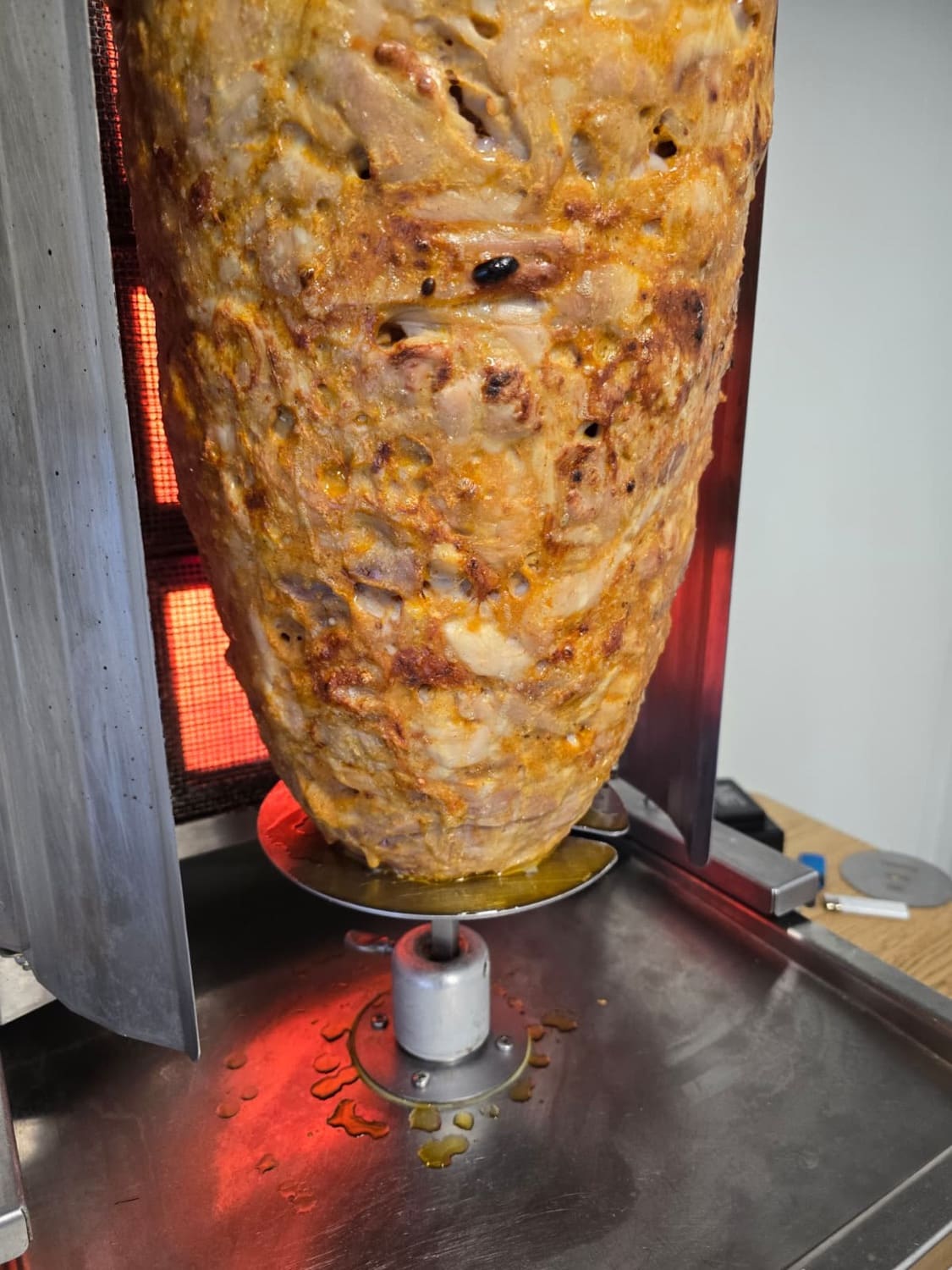
Doner kebab producer with our own plant in Silesia
We produce doner kebab cones for the spit in three flavour lines: chicken, turkey and mix. For 12 years we've been exporting them to 10 countries, and now we also deliver to buyers in Poland. Every batch leaves with EU documents and a Halal certificate.
Customs clearance, certificates and refrigerated trucks across borders are our daily routine, not the exception.
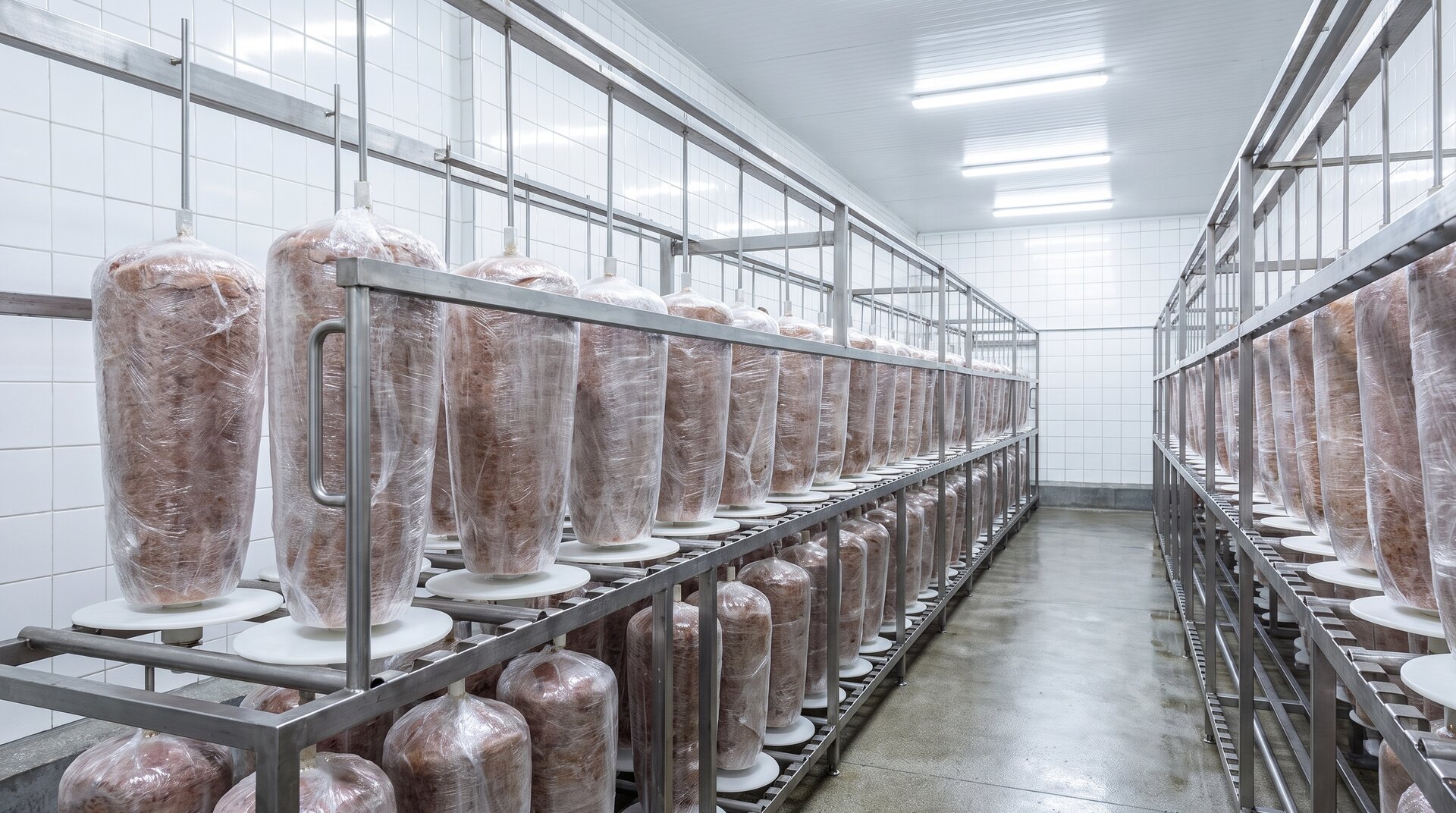
Spit conesthat carve down evenly
We've made kebab in one category for 12 years instead of spreading ourselves across everything. That keeps the recipe refined and the yield after roasting predictable.
- Chicken, turkey and mix in proportions agreed with you
- Cone weights matched to your grill and your outlet's turnover
- Deep-frozen or chilled product, packaging matched to your market
How to spot a good kebab producer
The plant's veterinary approval number
A producer gives it on the spot, because it appears on every label. A middleman starts checking. It's the quickest test of who you're really talking to.
A specification with the full composition
Meat content, ingredients, nutritional values and storage conditions in writing. If a supplier dodges questions about the composition, you already know enough.
Repeatable yield
Portion cost comes down to how many kilograms end up on the tray after roasting. A fixed recipe gives a predictable yield, so you calculate your margin on solid numbers.
EU documents and Halal
Certificates, commercial documents and the Halal certificate travel with the goods, not in a separate email a week later. In export they're a condition of entry, not an extra.
Cold chain
A frozen cone lives and dies by temperature. Ask what the producer transports the goods in and how they hold the cold along the whole route to your warehouse.
Scale that grows with you
A good kebab producer can handle both the first trial pallet and full truckloads on a fixed schedule once your sales take off.
The same taste on Tuesday and on Saturday. The recipe does that, not chance.
Howkebab production works
Raw material and marinade
Meat from vetted PL/EU suppliers goes to cutting, then into a marinade made to a fixed recipe. Chicken and turkey proportions are agreed with the buyer.
Forming the cone
We layer the marinated meat into a spit cone. Cone weight is matched to the grill and the outlet's turnover, from small ones to the largest.
Freezing and packing
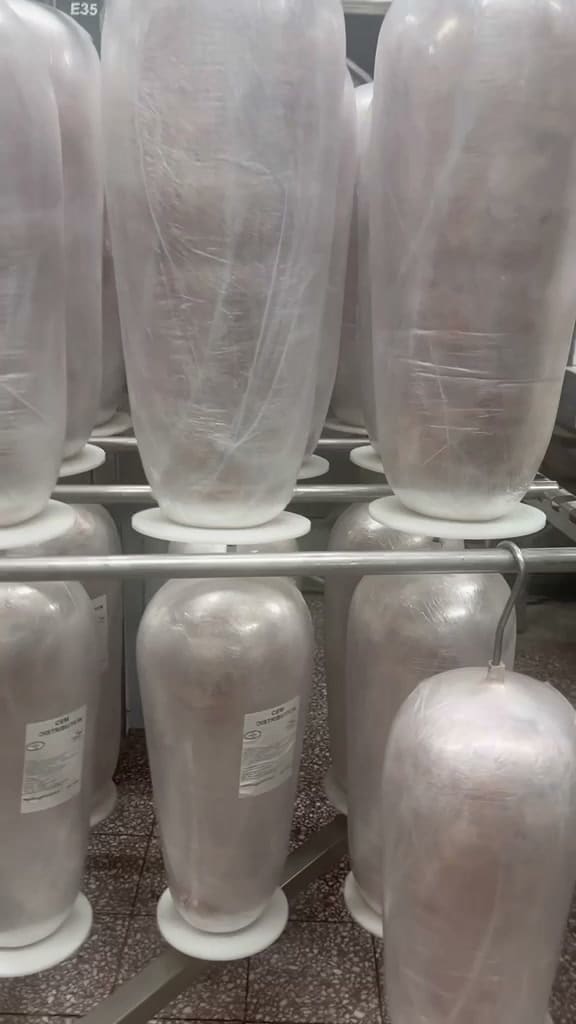
Formed cones are deep-frozen and packed in foil and a carton, or in an aluminium tube, depending on the buyer's and the market's requirements.
Documents and dispatch
Every batch leaves in a refrigerated truck with a full set of EU documents and a Halal certificate. The delivery schedule is agreed up front, from one pallet to a full truckload.
A kebab producerunder your own label
For distributors and chains we produce kebab under their brand: your label, an agreed recipe and fixed batch parameters. Launch in 3 to 8 weeks.
Questions about kebab producers
How does a kebab producer differ from a wholesaler?
A producer makes the meat in its own plant and is responsible for the recipe, consistency and documents. A wholesaler buys finished goods and resells them with a margin. We've covered the full comparison of both buying models in the article on choosing between a producer and a wholesaler on our blog.
From what volume does a kebab producer sell direct?
Usually from the level of cartons or the first pallet, and terms improve with scale. At 2Mundos we agree volume and schedule individually: working with a single kebab shop looks different from working with a chain, and different again from a distributor moving full truckloads.
What is the biggest kebab factory in Poland?
The Polish kebab production market has been growing for years, with a dozen or more industrial producers on it, from artisan plants to factories counted in hundreds of tonnes a month. When choosing a supplier, plant size matters less than product consistency, documents with every batch and whether the producer will keep your schedule.
Will a producer make kebab under my brand?
Yes. We launch a private label product in 3 to 8 weeks: we agree meat proportions, cone weights, packaging and labels in the language of your market. Details are on our private label page.
What documents does a producer provide when exporting kebab meat?
Veterinary certificates and EU commercial documents with every batch, plus a Halal certificate. After 12 years in export, customs clearance and cold-chain logistics are routine for us, so the goods cross borders without surprises.
Chicken, turkey or mix: what does 2Mundos produce?
Three flavour lines in spit cones: chicken, turkey and mix, deep-frozen or chilled. Meat proportions and cone weights are matched to the order. You'll find the full specification in the doner kebab range.
Check the terms straight from the plant
Tell us what volume and which products you're interested in. We reply with concrete terms and a date for the first delivery, with no obligation.