Wholesale kebab: which meat should a foodservice wholesaler stock?
Which wholesale kebab should you add to your range? Compare chicken, beef and mixed kebab meat and see how to build a portfolio for foodservice customers.
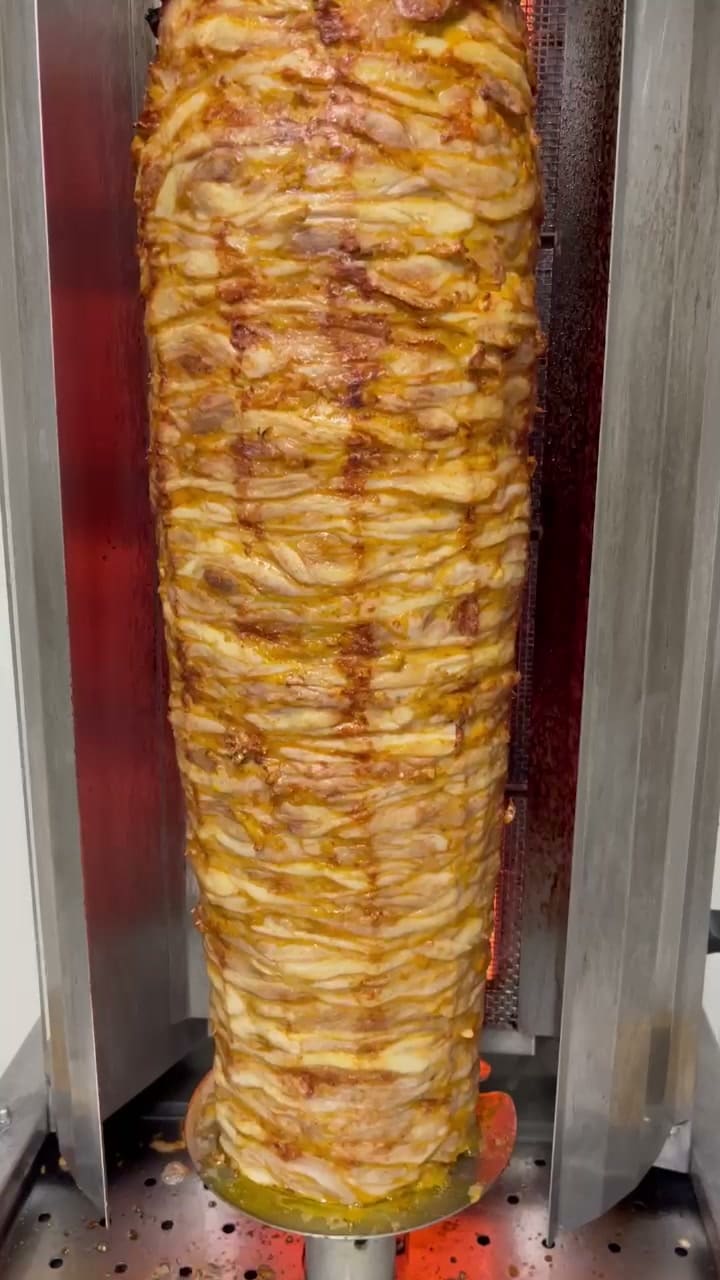
You choose wholesale kebab for your range based on your customers. What counts is which outlets you serve, which price segment they work in, how fast stock turns over at their premises and which meat variants you can get from the producer in consistent quality. Below we show how a foodservice wholesaler can build a kebab meat wholesale portfolio step by step, from a single variant to an extended range.
Key points
- The core of most wholesalers’ ranges is wholesale chicken kebab, made from chicken or from chicken and turkey, in cylinders for the spit.
- Beef and beef-and-poultry kebab are worth adding when customers ask for them and when you have a separate supplier for them.
- The meat species is only one axis of the range. The second is cone weight, and the third is the form, meaning frozen or chilled.
- Start with one or two variants and extend the range only once you know the turnover at your customers.
- Choose the producer last, when you already know which variants, weights and volumes you need.
Which types of kebab should a wholesaler stock?
Kebab meat at a wholesaler falls into three groups: poultry, beef and mixed. Each plays a different role in the portfolio, so before you order, decide which outlets it is meant for.
Wholesale chicken kebab: the core variant
Poultry kebab meat goes to kebab shops, quick service restaurants, food trucks and restaurants with takeaway dishes. It works in sandwiches, wraps, boxes and plated dishes, so a single line in your price list serves very different customers.
Poultry also gives you the widest choice. A cylinder can be made entirely from chicken, with added fillet or from chicken and turkey. These variants differ in meat texture and price, so on one species you can build several items for different segments.
Wholesale beef kebab: when is it worth adding?
Treat wholesale beef kebab as an additional variant. It is worth adding when some of your customers build their menu around traditional kebab or want to raise the price of a dish and need a different meat for it. Beef kebab meat then lets you extend the range into a higher price segment.
Before you put it on the price list, check how many customers actually ask for it. Beef is a separate warehouse item and often a separate supplier. At 2Mundos we produce poultry meat only, so a wholesaler has to order the beef variant from another producer.
Beef and poultry kebab: rounding out the portfolio
Beef and poultry kebab meat combines the taste of beef with a price closer to poultry. It suits outlets that want to make their menu stand out without a big increase in the price of the dish. In a wholesaler’s range it rounds out the offer for customers looking for something in between.
A mix can also be built on poultry alone. Our mixed variant is a chicken and turkey cylinder, which we make in proportions from 90/10 to 50/50. Such a mix gives a different meat texture than pure chicken and does not require a second supplier.
Chicken or beef kebab: which to choose for the core range?
Poultry is usually chosen for the core range, and beef is added as a second step. Make the final decision based on enquiries from your own customers. The table below sets out the differences from a wholesaler’s perspective:
| Criterion | Chicken kebab | Beef or beef and poultry kebab |
|---|---|---|
| Customer type | kebab shops, fast food, food trucks, restaurants | outlets with a traditional or more expensive menu |
| Price segment | broad, from entry level to higher | usually higher than poultry |
| Role in the portfolio | core of the range | additional variant |
| Weights at 2Mundos | cones from 10 to 50 kg | we do not produce beef |
| Range extension | meat variants, flavour lines, forms | depends on the second supplier |
Ready-made and frozen wholesale kebab: why include it in your portfolio?
Ready-made wholesale kebab is a cylinder formed and seasoned by the producer, which the outlet puts straight on the spit. For a wholesaler this means a simple item in the price list and a consistent product in every delivery. Ready-made kebab meat also saves your customers time, because they do not have to marinate or form the meat themselves.
Frozen kebab meat makes warehouse work easier. Shelf life is counted in months, so you can build stock for the season, combine deliveries into larger batches and serve longer routes. Stock planning becomes simpler, because the goods do not force you to sell within a few days.
Keep the number of SKUs in mind. Every meat variant, weight and form is a separate item in the warehouse and in the price list. Frozen wholesale kebab also requires an unbroken cold chain from the plant to the outlet. We cover the details in our posts on how to buy frozen kebab meat wholesale and on whether to choose frozen or chilled kebab meat.
How to match your kebab range to your customers?
Prepare a different portfolio for each customer group. Wholesale kebab meat is bought by different outlets, and each of them looks at something else:
- Kebab shops need a fixed variant and a fixed weight, because they work on one spit all day.
- Fast food outlets may need smaller cones and a milder taste, when kebab is just one of many items on their menu.
- Restaurants look for a variant that makes the dish stand out, for example a mix with turkey or a bolder flavour line.
- Restaurant chains require consistency at every location, a product specification and regular deliveries on an agreed schedule.
- Smaller customers buy less often and in smaller amounts, so frozen meat in smaller weights works well for them.
- Larger customers order regularly and at scale, so it is often worth offering them larger cones or the chilled form.
We explain how to match the weight to an outlet’s daily sales in the post Kebab cone 10, 30 or 50 kg?
How many kebab variants should you stock?
The number of variants depends on how many customers you have and how varied they are. Every new item means stock in the cold store, so extend your range in stages.
Starter range
A starter range is one or two variants, most often chicken kebab in one flavour line and one or two weights. This set is enough to test turnover with your first customers without tying up a large amount of stock in the freezer.
Core range
A core range covers several types of meat and weights. Chicken is joined by a mix with turkey or a second flavour line, and you split the cones into smaller ones for bars and larger ones for kebab shops. At this stage it is also worth considering the chilled form for customers on short routes.
Extended range
An extended range has more variants for diverse customers. It includes several flavour lines, the full scale of weights, both forms and, if your customers need it, beef kebab from a second supplier. This model makes sense with a large and stable base of outlets.
How to choose a producer for your kebab portfolio?
Once you know which types of meat, weights and volumes you want to stock, the next step is choosing a supplier. Look for a plant that will deliver the same variants in consistent quality and on a fixed schedule. We describe how to approach this decision in the article kebab meat producer, and you will find a checklist in the post how to vet a kebab meat producer.
Wholesale kebab for wholesalers: check the available variants
We are a kebab meat producer from Silesia, Poland, and we have been exporting to 10 countries for 12 years. We make cylinders and cones from 10 to 50 kg in three flavour lines: White, Gold and Red. We can prepare each line in three bases: 100% chicken, chicken with fillet and chicken with turkey. We deliver them frozen or chilled, with a Halal certificate and EU documents for every batch.
Ask us about meat types, weights, volumes, available variants and terms of cooperation. We agree the minimum order and payment terms individually, and we fulfil a standard order within 1 to 3 weeks. You will find the full specification in our wholesale kebab offer for foodservice, and the terms for wholesale buyers on the kebab wholesale page.
Building or extending the kebab range at your wholesale business? Ask about available meat variants, weights and B2B terms.
FAQ: wholesale kebab
Which kebab should a wholesaler add to its range?
To start, choose chicken kebab in cylinders for the spit, because it suits the widest group of outlets. Add further variants, such as a mix with turkey, another flavour line or beef, when customers ask for them.
Chicken or beef kebab: which should you choose?
Poultry is usually chosen for the core range, and beef is treated as an additional variant for outlets with a more expensive or traditional menu. Base the decision on enquiries from your own customers. Keep in mind that beef often means a second supplier and a separate warehouse item.
Is it worth offering beef and poultry kebab?
It is, if you have customers who want their menu to stand out without a big increase in the price of the dish. If you prefer to stay with one supplier, consider a pure poultry mix. At 2Mundos we make a chicken and turkey cylinder in proportions from 90/10 to 50/50.
Does frozen kebab meat work in wholesale?
Yes. Frozen meat has a shelf life counted in months, so it lets you build stock for the season, combine deliveries and serve longer routes. The condition is an unbroken cold chain from the plant through the warehouse to the outlet.
How many types of kebab should a wholesaler offer?
One or two variants are enough to start. Once you know the turnover at your customers, extend the range with further meat types, flavour lines and weights. Every new variant is a separate warehouse item, so add it only when you have buyers for it.
Where to buy kebab wholesale?
Wholesalers and distributors most often buy kebab directly from the producer. The plant provides consistent batches, product specifications and terms matched to volume. Before your first full order, ask for a trial batch and check how the product performs at your customers.