Kebab cone 10, 30 or 50 kg? How to match the weight to outlets
See how to match kebab cone weight to a shop's daily sales, when to pick 10, 30 or 50 kg and how to combine a mix of cone weights in a single wholesale order.
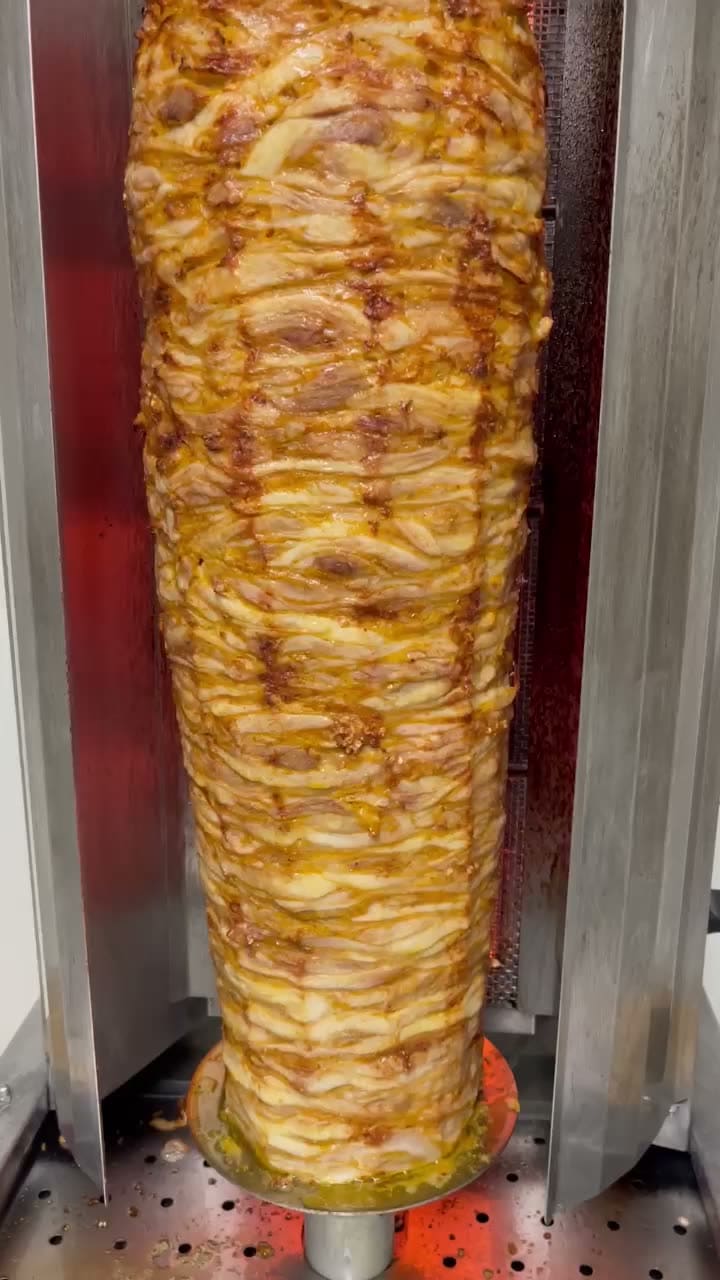
A wholesale kebab cone weighs from 10 to 50 kg, and that weight is matched to the daily sales of the outlet that will roast it. A cone that is too big stands on the spit until the evening and loses quality, while one that is too small forces a change in the middle of the rush. If you run foodservice distribution, you choose cone weights for all your customers’ outlets at once. We show how to convert an outlet’s sales into a cone weight and how to combine a mix of cones in a single order.
Key points in brief
- The starting point is the outlet’s daily sales in kilograms, not the price per kilogram.
- A well-chosen cone comes off the spit within one working day of the outlet.
- Too big a cone with slow turnover dries out over the heating elements; too small a cone with high turnover means changes and downtime in the rush.
- One order can combine weights: smaller cones for outlets that are just starting, bigger ones for points with settled sales.
- The 1-5 kg packs from search results serve the retail and testing market; the wholesale standard is kebab meat for the spit, meaning cones from 10 kg up.
Why does the kebab cone weight decide quality?
The cone works in the heat all day long, so the time from mounting it on the spit to shaving off the last layer translates directly into taste and losses. A weight matched to the outlet’s turnover means the meat comes off as it sells and does not stay on the heating elements for another day, and the outlet does not change the cone in the middle of the rush.
Both extremes cost money. A 50 kg cone in an outlet that sells a dozen or so kilograms a day stands on the spit for a second and a third day: the layers dry out, the taste fades, the leftovers end up in the bin. A 10 kg cone in a point with strong sales runs out before the evening, so the staff mount another one at the busiest hour and customers wait. In both cases the outlet sees the problem at its own place, but directs the complaints at the meat supplier, meaning at you.
How to match the cone weight to an outlet? Five steps
Collect the outlet’s daily portion sales, convert them into kilograms of meat, choose a cone that comes off within one working day, check the grill’s load capacity and height, and after the first month correct the weight against real data. You repeat the same pattern for every outlet on your route and build the order from it.
- Ask the outlet about its daily portion sales. The owner knows this number from the till; ask about weekends too, because turnover can double then.
- Convert portions into kilograms. A purely indicative example: the outlet sells 60 portions a day, a portion takes about 150 g of meat before roasting, so daily usage is about 9 kg.
- Choose a cone for one working day. The weight should sit close to the usage on the stronger days, so the spit runs down to zero before closing.
- Check the grill. The spit has its load capacity and height, so the biggest cones need the right equipment.
- Correct after a month. Compare the kilograms ordered with real usage and move the outlet one weight up or down.
The table below is an indicative example for the first conversation with an outlet, not a product specification. The final choice depends on portions, equipment and the traffic pattern.
| Outlet’s daily sales (example) | Indicative cone weight |
|---|---|
| up to about 10 kg of meat | 10 kg |
| about 10-25 kg | 15-25 kg |
| about 25-40 kg | 30-40 kg |
| over 40 kg or two spits | 50 kg or two smaller cones |
How to combine a mix of cone weights for different outlets?
A distributor rarely carries a single weight, because a route links outlets with different sales. On one pallet you therefore combine 10 kg cones for points that are just starting, 30 kg for outlets with stable traffic and 50 kg for the strongest customers. How to prepare the data for such an order is described in the article Kebab meat wholesale: how to order in bulk.
5 kg and 1 kg kebab meat: retail or wholesale?
The small packs visible in search results serve the retail market: home purchases, taste tests and points without a spit. In wholesale, the unit is a cone for the spit, sold by the carton and the pallet by a producer or a kebab wholesaler. If a customer asks you about kilogram packs, point them to retail, and convert the demand of an outlet with a spit into cones using the steps above. The differences between buying from a producer and from a wholesaler are covered in the article Kebab meat producer or wholesaler.
2Mundos cones: from 10 to 50 kg to match outlet turnover
We are a kebab meat producer from Silesia; after 12 years of export our cones travel to 10 countries. We make them from chicken, turkey and mix, in three marinade lines, frozen and chilled, in weights from 10 to 50 kg. Every batch ships with EU documents, a Halal certificate and under HACCP supervision. Tell us which outlets you supply and we will propose cone weights and a delivery schedule.
FAQ: kebab cone weight
What cone weight should a new outlet choose?
For an outlet that is only opening and does not know its turnover yet, it is safer to start with a smaller cone, for example 10 kg, and watch how much comes off the spit by closing time. After two weeks the real sales are visible, and then you move the weight up one size instead of guessing at the start.
Can you buy 5 kg or 1 kg kebab meat wholesale?
1 kg and 5 kg packs serve the retail market: shops, taste tests and small points without a spit. The wholesale standard is kebab meat for the spit, meaning cones from 10 kg up, sold by the carton and the pallet. If a customer asks about small packs, send them to retail, and order cones from a producer or a wholesaler.
What happens when a cone is too big for an outlet?
The meat stays on the spit longer than it should, the outer layers dry out, and the leftovers after closing usually go in the bin. The outlet sees worse taste and growing losses, so the complaint lands with the distributor, even though the product was fine. The fix is to go one weight down with the next order.
Can you combine different cone weights in one order?
Yes, and in distribution it is normal practice. On one pallet you combine, for example, 10 kg cones for outlets that are just starting, 30 kg for points with stable sales and 50 kg for the strongest customers. One transport then serves the whole route, and each outlet gets a weight matched to its turnover.