Kebab meat producer: how a wholesaler can choose a long-term partner
How to choose a kebab meat producer for your wholesale business? Check product quality, production process, logistics, available formats and B2B terms.
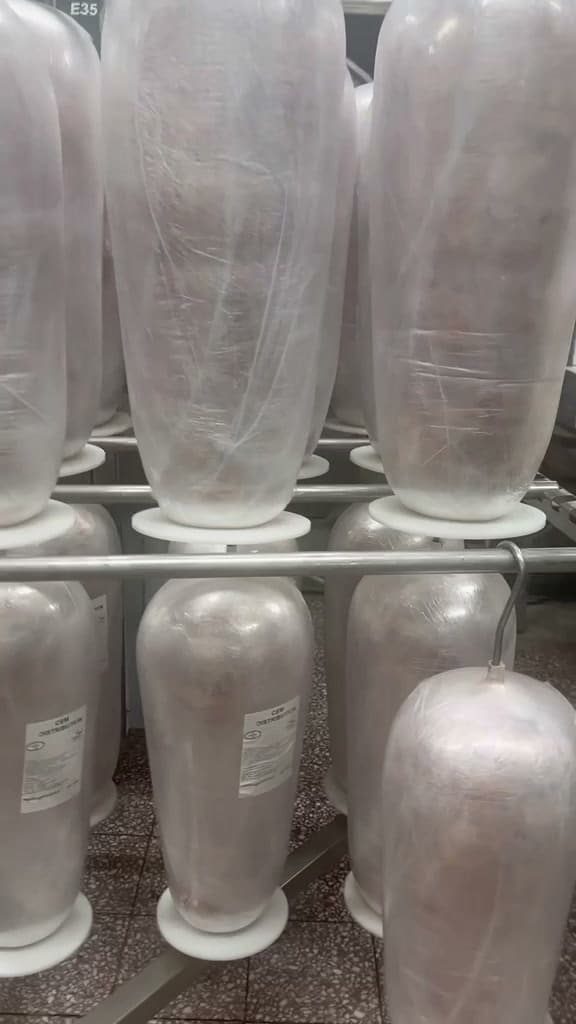
A wholesaler looking for a long-term kebab meat producer compares far more than the price per kilo. What counts is consistency between batches, product availability in peak season, cold chain logistics and whether the kebab manufacturer can handle your volume as you grow. We show you how to assess a kebab meat supplier step by step and how to start regular B2B cooperation.
Key takeaways
- Buy directly from the producer when your orders are regular and growing. The middleman’s margin disappears and you agree the specification with the plant itself.
- Assess the producer in four areas: capacity and scalability, B2B experience, product portfolio and quality documentation.
- Meat for wholesale must have a consistent weight, clear labels, sturdy packaging and predictable stock rotation.
- Compare prices on total cost: composition, cooked yield, weight tolerance, transport, payment terms and the risk of shortages.
- Start cooperation with an enquiry containing specific data, a trial batch and an agreed delivery schedule.
Producer, wholesaler or middleman: who should you buy kebab meat from?
For regular and growing purchases, a direct kebab meat producer is the most cost-effective option. You buy at the source, so the price carries no middleman margin, and your questions about composition, lead times and availability go to the people who make the product. A wholesaler or middleman makes sense for small, irregular orders.
Every link in the chain adds its own margin and slows down the flow of information. When a batch arrives different from the last one, the middleman first has to ask the plant what changed. A kebab producer answers straight away, because it knows the recipe, the raw material and the production date of every batch.
Direct contact with the plant also gives you influence over things you cannot agree on when buying through resellers:
- The product specification, meaning the meat ratios, the weight and the packaging format.
- Availability, because the plant plans production around your orders and sees earlier what may run short.
- Regular deliveries at a steady pace, which you can negotiate for a quarter or a season.
The difference between production and reselling is simple. A meat producer runs a plant with an assigned veterinary approval number and is responsible for every batch. A kebab meat wholesaler buys finished goods and delivers them onwards. You will find a detailed comparison of both models in the article Kebab meat producer or wholesaler?, and the differences from a sales channel perspective are described on the doner kebab producer and kebab wholesale pages.
What criteria should a kebab meat producer meet?
A good kebab manufacturer for wholesalers meets four conditions: it has the capacity to handle your volume through the season, it understands the realities of B2B service, it offers a portfolio that matches your customers and it documents the quality of every batch. Check them before your first order, because a complaint is when you find out which supplier does not meet them.
Production capacity and the ability to scale orders
Ask how much the plant produces per week or month and what share of that capacity it can reserve for you. Find out what the minimum orders are and what happens when your volume grows by half. The most important test is the season. In summer, the spits in restaurants turn faster, and a producer with no spare capacity starts splitting stock between customers.
Experience serving the B2B market
A producer that works with wholesalers and distributors understands that your customers are dozens or hundreds of foodservice outlets. It knows how important on-time delivery to the exact day is, and a consistent taste in every delivery. Ask what types of customers it already works with and how long it has been running regular deliveries. Export experience speaks well of its organisation, because it requires documents and logistics at a level the domestic market does not always demand.
Product portfolio
Check what types of meat the producer offers, in which formats and weights, how many recipe variants it has and whether it can extend the range to suit your needs. The portfolio should cover what your foodservice customers expect. If you want to sell the product under your own name in the future, ask about private label right away.
Quality and safety standards
Ask for the product specification, the plant’s veterinary approval number and a sample set of batch documents. Ask how traceability works, meaning whether you can get from the label to the production date and the raw material. Ask about the food safety system, for example HACCP, and about certificates if your customers require them, for example Halal. We describe this step by step in the article How to vet a kebab meat producer, and broader criteria for assessing a plant are collected in How to choose a kebab meat supplier.
What does kebab production look like at a direct producer?
Kebab production at a direct producer runs in five stages: raw material selection, recipe, forming, freezing with packaging and preparation for shipping. A plant that controls this whole process in house is responsible for the result of every batch. That is why questions about kebab production show clearly who you are really talking to.
Raw material selection and control
Everything starts with the meat. The producer should buy raw material from proven suppliers, know its origin and accept it according to fixed parameters. Consistent raw material gives a consistent product, and in the event of a complaint it lets you quickly identify the cause.
Recipe development
The recipe determines the taste, the texture of the meat and how the cone behaves on the spit. It also determines the yield, meaning how much meat is left after cooking. Ask whether the recipe stays the same between batches and who approves every change.
Product forming
At this stage, the marinated meat takes the shape of a roll or a cone. Good forming produces a stable cone that does not fall apart during cooking and slices evenly. For a restaurant, that means less waste and faster service.
Freezing and packaging
Freezing and packaging protect the product during transport and storage. Tight film and a sturdy carton protect the cone from damage and loss of quality. Ask how the product is protected and what its shelf life is.
Preparation for distribution
The finished product gets a label with the batch number, the date and the plant’s veterinary approval number. Cartons go onto pallets, and pallets go into refrigerated transport together with the documents. Good order at this stage makes it easier for you to receive the goods and rotate stock in your warehouse.
How to assess whether kebab meat is suitable for wholesale?
Kebab meat is suitable for wholesale when it holds up well in storage, in transport and in onward resale. Taste matters, but a wholesaler also looks at consistent parameters, packaging, labelling and rotation. A product that tastes great but falls apart in the carton or has an illegible label generates complaints.
Check these characteristics before adding a product to your range:
| Characteristic | What to check |
|---|---|
| Consistency | Whether successive batches have the same composition, taste and appearance |
| Weight | Whether the cone weight matches the declaration and what tolerance it has |
| Packaging | Whether the film and carton withstand loading, transport and storage |
| Labelling | Whether the label shows the batch, date, ingredients and plant number |
| Rotation | Whether the shelf life lets you sell the stock without discounting the last units |
| Storage | What temperature the product requires in the warehouse and in the vehicle |
| Transport | Whether the cones arrive intact after the route to the restaurant |
| Fit | Whether the formats suit your customers’ spits and turnover |
A full overview of what good wholesale kebab is and how to build a range around it can be found in the article wholesale kebab. Practical rules for ordering and trial batches are described in Kebab meat wholesale: how to order.
What types of kebab meat should a producer offer?
On the market you will find three basic types of kebab meat: poultry, beef and beef with poultry. A producer does not have to make all of them; what matters is that its portfolio matches your wholesale customers. In most wholesale ranges, poultry is the foundation and the other variants complement the shelf.
Poultry kebab meat
Poultry kebab meat is the most frequently ordered variant in foodservice. It is made from chicken, turkey or a mix of both. It has a broad customer base, from small restaurants to chains, and usually the fastest rotation. That is why in a wholesaler’s range it plays the role of a core product that must always be available.
Beef kebab meat
Beef kebab meat goes to restaurants whose customers look for a traditional taste and accept a higher portion price. Composition has a strong influence on how the offer is positioned, and supply stability is especially important here, because beef as a raw material tends to be more expensive and less available. If you introduce such a product, secure a reliable supplier.
Beef and poultry kebab meat
Beef and poultry kebab meat combines both raw materials. It lets you widen your price range and match the product to restaurants that want a beef character without the full price of beef. It is worth agreeing the meat ratios with the producer and checking them on a trial batch.
At 2Mundos we produce poultry only: chicken, turkey and a chicken and turkey mix, in three flavour lines. We do not make beef or beef and poultry variants. If your customers mainly order poultry, you will find the specification of our kebab for the spit in our offer.
Roll, cone or gyro: which format should you order wholesale?
Choose the format based on your customers’ spits and turnover. A wholesale kebab roll works well in restaurants with steady sales, a wholesale kebab cone gives stability at large weights, and products known on the market as gyro go to Greek-style restaurants. A good producer will match the format and weight to the market you sell into.
When choosing a format, pay attention to five things:
- Naming, because roll, tube, cone and gyro are understood differently in different countries.
- Weights, meaning the range available from the producer and whether it covers both small and large restaurants.
- Form stability during cooking, because waste and even slicing depend on it.
- Fit with equipment, meaning the height and power of the spits in your customers’ restaurants.
- Packaging and transport, meaning how many pieces fit in a carton and how a pallet is stacked.
We make tubes and cones in weights from 10 to 50 kg. How to match the cone weight to a restaurant’s turnover is described in the article Kebab cone: what weight?.
Why does frozen, ready-made kebab meat work well in distribution?
Frozen, ready-made kebab meat gives the distributor a long shelf life, meaning stock in the cold store and freedom in route planning. You can buy a larger volume, ride out uneven weeks and serve more distant outlets without the risk of the goods expiring. The condition is an unbroken cold chain from the plant to the restaurant.
Frozen wholesale kebab makes several things easier at once:
- Storage, because a shelf life counted in months lets you hold stock ahead of the season.
- Stock planning, because you order full pallets at a steady pace.
- Transport, because a frozen cone handles loading and longer routes better.
- Reducing waste, because the goods do not have to sell within a few days.
- Rotation, because you issue batches in the order they arrived and can trace them easily.
- SKU management, because you can keep several variants and weights side by side without time pressure.
Frozen kebab meat does, however, require cold storage on your side and at your customers, as well as planned thawing in the restaurant. We write more about the logistics of this form in the article frozen kebab meat, and you will find a comparison with the chilled form in Frozen or chilled kebab meat?.
How to compare prices from kebab meat producers?
Compare prices from kebab meat producers on the total delivered cost. The price per kilo on the invoice does not show how much meat is left after cooking, how much you will pay for transport or what a stock shortage at the height of the season costs you. A cheaper price list often loses to a more expensive one once you add up all the components.
Put the offers in one table and compare them on these points:
| Cost component | What to look at |
|---|---|
| Composition | Declared meat content and type of raw material |
| Yield | How much meat is left on the tray after cooking |
| Weight | Weight tolerance and whether you pay for the actual weight |
| Consistency | Whether successive batches behave the same way |
| Transport | Who pays for delivery and from what volume |
| Minimum order | How much you have to buy to get a given price |
| Payment terms | Payment deadline and its impact on your cash flow |
| Shortage risk | Whether the producer can keep up deliveries in season |
| Complaints | How quickly and on what terms it handles claims |
The price of wholesale kebab always depends on scale. The biggest differences show up in yield and transport, because meat with more water looks good on the price list but loses out on the spit. Ask every kebab supplier for a sample and cook them all under the same conditions.
How do you start long-term cooperation with a kebab producer?
Cooperation with a kebab producer starts with a request for quotation, followed by a trial batch, agreement on volumes and terms and, finally, a delivery schedule. You can go through the whole process without dropping your current supplier. The more precise the data you give at the start, the faster you will receive a concrete offer.
Sending a request for quotation
In your enquiry, state:
- The type of product, meaning the meat, flavour and format.
- The forecast monthly or quarterly volume.
- The delivery frequency.
- The target market you sell into.
- The required weights.
- The delivery location.
Ordering samples or a trial batch
A trial batch shows how the product performs on your routes, in your warehouse and at your customers. Pass it on to two or three trusted restaurants and collect their feedback before you add the product to your price list. Also compare several successive batches, because consistency only becomes visible over time.
Agreeing volumes and commercial terms
At this stage you agree minimum orders, price thresholds, payment terms and lead times. Also ask how the producer will respond to growth in your purchases. Terms are easier to agree at the first pallet than at a full truck.
Preparing a delivery schedule
A fixed schedule protects you from shortages and lets the producer plan production. Share forecasts in advance, especially before the season, and agree a steady delivery pace. How to organise the ordering itself is described in the article Kebab meat wholesale: how to order.
Kebab meat producer for importers and foreign distributors
Importers and foreign distributors need a producer that knows export: documents, labelling, customs clearance and cross-border transport. A kebab meat producer from Poland has a lot to offer here, because poultry meat exports from Poland have a long tradition. Still, check whether a given plant exports on a regular basis.
Companies abroad searching for terms such as kebab meat supplier, kebab meat manufacturer or kebab wholesale usually ask about the same things:
- whether the producer can deliver larger volumes, up to full trucks on a fixed schedule,
- whether it has export experience and adds certificates to every batch,
- whether it will adapt labels and packaging to the requirements of the target market,
- in which language you will conduct commercial correspondence,
- who organises refrigerated transport and how regular foreign deliveries are.
Exporting poultry meat requires EU documents for every batch. A plant that has been doing this for years has the procedure in place, so deliveries run smoothly.
How to compare kebab producers on the market?
Compare kebab producers using your own model, based on the same criteria for every plant. Online rankings rarely show how a supplier will perform at your volume and on your routes. Collect offers, order samples and assess them in a single table.
Criteria worth including in the comparison:
- Product specifications and declared composition.
- Availability of samples or a trial batch.
- Production capacity and reserve for the season.
- Available meat variants, formats and weights.
- Logistics terms and refrigerated transport.
- Minimum volumes.
- Quality of sales service and one dedicated account manager.
- Response time to enquiries and complaints.
- References from other wholesalers and distributors.
- Transparency of batch documentation.
Give each criterion a weight that reflects your priorities. For a wholesaler with long routes, transport will matter more; for a chain, consistency of taste.
Checklist for choosing a kebab meat producer
Go through the list below before signing a standing order. If you do not get a clear answer to any of the questions, ask again or look for another kebab meat supplier. A proven kebab producer will answer all of them without hesitation.
- Is the company a producer with its own plant and veterinary approval number?
- What is its production capacity?
- Does it handle regular wholesale orders?
- What types of meat does it offer?
- What formats and weights are available?
- Can you get samples or a trial batch?
- How does it control the quality of successive batches?
- How are freezing and packaging done?
- What are the minimum order quantities?
- How does refrigerated transport work?
- Can it scale up deliveries?
- How are complaints handled?
- Does it work with export customers?
- What documents does the wholesaler receive with each batch?
- Can it provide references or show B2B experience?
Kebab meat producer for wholesalers: ask about terms of cooperation
To prepare a wholesale offer, the producer needs a few specific details. State the type of meat, the product format, the weight, the expected volume, the order frequency, the delivery location and the target market. Based on that, you will receive terms tailored to your scale, with no obligation.
2Mundos: kebab meat producer from Silesia
We are a kebab meat producer from Silesia. For 12 years we have been exporting chicken, turkey and mix tubes and cones, frozen and chilled, in weights from 10 to 50 kg, and our products go to 10 countries. Every batch leaves with a Halal certificate, HACCP documentation and export certificates, and the label shows the plant’s veterinary approval number PL 24094301 WE. We fulfil standard orders within 1 to 3 weeks, and we agree minimum volumes and payment terms individually. Details of cooperation are collected on the for distributors page.
FAQ: kebab meat producer
How do I find a direct kebab meat producer?
Check whether the company actually runs production. Ask for the plant's veterinary approval number, the product specification and sample batch documents. Ask about production capacity, portfolio and experience serving wholesalers. A producer will answer straight away, while a middleman will start asking its own supplier.
How does a kebab meat producer differ from a wholesaler?
A producer is responsible for the whole manufacturing process, from raw material to the packed cone, and runs a plant with a veterinary approval number. A wholesaler or middleman buys finished goods and resells them, often together with other foodservice supplies. When you buy from the producer, you pay less at volume and have a say in the specification.
What kebab meat can be bought wholesale?
The market offers poultry variants made from chicken, turkey or a mix of both, as well as beef and beef with poultry. What you can buy depends on the portfolio of a given producer. At 2Mundos we produce poultry: chicken, turkey and mix, frozen and chilled.
How do I check kebab meat quality before placing a standing order?
Analyse the product specification, order a sample and cook it under restaurant conditions. Check the yield, texture and taste, then compare the parameters of several successive batches. Consistency between batches tells you more about a producer than one good sample.
Does a kebab producer offer product samples?
A sample or trial batch is often one of the stages of starting B2B cooperation. It lets you test the product on your routes and with your customers before you add it to your price list. You agree the terms of the test with the producer in your request for quotation.
What does the wholesale price of kebab meat depend on?
The price depends on the composition and type of meat, the weight, the order size, the packaging method, transport and payment terms. When comparing offers, calculate the cost per kilo after cooking including delivery, because the list price alone does not show this.
What are the minimum orders at a kebab meat producer?
The minimum volume depends on the product, format, logistics conditions and the cooperation model. Different thresholds apply to the standard range and to private label products. At 2Mundos we agree minimum orders individually.
Does a kebab meat producer handle exports?
It depends on the producer. Export requires EU documents for every batch, refrigerated logistics, sufficient volume and experience with the target markets. 2Mundos has been exporting for 12 years and delivers to 10 countries.
What kebab meat formats are available wholesale?
Wholesale, you can buy rolls, also called tubes, cones and products known as gyro. Each producer has its own weight range. At 2Mundos we make tubes and cones from 10 to 50 kg.
How do I start regular cooperation with a kebab producer?
Send an enquiry describing your needs: product type, volume, weights and delivery location. Then order a sample or trial batch, agree volumes and commercial terms and, finally, a delivery schedule. You do not have to replace your current supplier straight away.